Introduction
Subsea actuators are essential components in offshore oil and gas operations, controlling valves and production systems at depths where human intervention is impossible. These electro-hydraulic and all-electric devices ensure safe, continuous production by opening and closing valves in subsea trees and pipelines thousands of feet beneath the ocean surface.
Aker Solutions built its subsea actuator reputation on North Sea and deepwater projects, but that business now sits within the OneSubsea joint venture with SLB and Subsea7. For procurement teams, this consolidation raises a practical question: who else can reliably deliver?
This article examines the top Aker subsea actuator alternatives across hydraulic, electric, and hybrid actuation technologies — covering depth ratings, integration strategies, and what sets each supplier apart.
TL;DR
- OneSubsea remains a leading supplier, but strong alternatives span hydraulic, electric, and hybrid actuation platforms
- Key competitors include TechnipFMC, Baker Hughes, Dril-Quip, and Rotork—each with distinct market focus and depth/pressure capability
- Evaluate alternatives on depth rating, actuation type, subsea tree compatibility, certifications, and lifecycle cost
- All-electric actuator systems deliver measurable CAPEX savings—up to 15% on umbilicals and 10% on tree controls compared to electro-hydraulic alternatives
- Outside traditional oilfield supply chains, pressure-compensated electric actuators rated to 3,000–6,000m serve robotics and inspection applications that oilfield vendors don't address
Overview of Subsea Actuators in the Oil and Gas Industry
What Subsea Actuators Do
Subsea actuators are electro-hydraulic or all-electric devices that open and close valves and control flow in subsea trees and production systems at depth, ensuring safe and continuous offshore production. They convert electrical or hydraulic control signals into mechanical valve movement — enabling remote operation of equipment where human access is impossible.
Market Scale and Growth Drivers
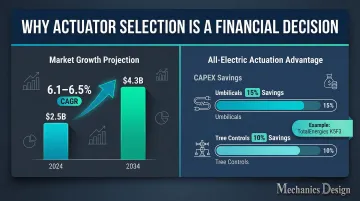
The global subsea valves and actuators market was valued at approximately $2.5 billion in 2024, with projections indicating growth to nearly $4.3 billion by 2034 — a compound annual growth rate of 6.1% to 6.5%. Broader subsea spending is anticipated to exceed $31 billion by 2027.
Key drivers behind this expansion include:
- Increasing deepwater and ultra-deepwater exploration activity
- The industry-wide shift from electro-hydraulic to all-electric actuator systems
- Greater emphasis on reducing umbilical costs and topside infrastructure
As that market grows, procurement teams are increasingly evaluating alternatives to established suppliers like Aker Solutions — comparing technical specifications, lead times, digital integration capabilities, and total cost of ownership, not just brand reputation.
The shift to all-electric actuation illustrates why these evaluations matter. TotalEnergies' K5F3 all-electric subsea well achieved a 15% CAPEX reduction on umbilicals over a 30-km step-out. It also delivered an additional 10% savings on tree and safety valve controls — numbers that make supplier selection a financially significant decision.
Top Aker Subsea Actuator Competitors and Alternatives
The five companies below were selected based on proven subsea actuator deployments, depth and pressure ratings, industry certifications, and overall market presence in the subsea production sector.
TechnipFMC
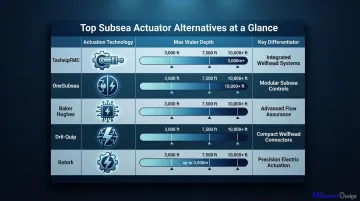
TechnipFMC is a global subsea production systems leader formed from the merger of Technip and FMC Technologies, with a comprehensive actuator and tree portfolio covering pressures up to 20,000 psi and water depths up to 10,000 feet across deepwater, ultra-deepwater, and shallow-water projects.
Competitive Differentiator:
TechnipFMC's iEPCI™ (integrated Engineering, Procurement, Construction, and Installation) model bundles actuators with full tree and umbilical systems—covering Subsea Production Systems (SPS) and Subsea Umbilicals, Risers, and Flowlines (SURF) from design through life-of-field services—reducing interface risk and enabling faster time-to-first-oil compared to multi-vendor approaches.
Proven deployments include LLOG Exploration's Who Dat field in the Gulf of Mexico (10,000 psi Multiphase Pump Station) and BP's Platina field offshore Angola at 1,200 to 1,500 metres water depth.
| Specification | Details |
|---|---|
| Key Actuator Technology | Electro-hydraulic and all-electric actuators integrated within the Subsea 2.0™ configurable platform; eSolutions™ portfolio with 800-series control systems for subsea electrification; G2i electric actuator for 20K HPHT applications |
| Depth / Pressure Rating | Up to 10,000 feet water depth; 20,000 psi maximum working pressure (20K HPHT subsea choke with G2i electric actuator) |
| Key Differentiator | iEPCI™ integrated delivery model; pre-engineered configurable Subsea 2.0™ components reduce lead times to 10–14 months; strong track record in Gulf of Mexico and West Africa deepwater projects |
OneSubsea (SLB — Schlumberger)
OneSubsea is the subsea product and systems brand operating as a joint venture that closed in October 2023, with SLB holding 70% equity, Aker Solutions 20%, and Subsea7 10%. The venture offers a wide portfolio of subsea tree systems, choke valves, and associated actuator technology.
Competitive Differentiator:
OneSubsea's compact fast-stepping electric actuators deliver significantly faster operation than competing products and are qualified for high-cycle applications, making them well-suited for fields requiring frequent valve cycling.
Integration with SLB's digital SCADA platforms and the Delfi digital ecosystem extends this further—adding remote monitoring, predictive maintenance, and subsea planning capabilities through 2D and 3D visualization tools.
| Specification | Details |
|---|---|
| Key Actuator Technology | Electric High-Power Rotary Actuator (2,000 ft.lbf / 2,711 N.m torque); Electric Low-Power Rotary Actuator; electro-hydraulic options for standard subsea tree valve control; operates manual valves through standardized 4-inch ROV interfaces per API Specification 17H |
| Depth / Pressure Rating | 14,750 feet (4,500 metres) water depth; 20,000 psi (137.9 MPa) maximum working pressure (Vx Omni subsea multiphase flowmeter specification) |
| Key Differentiator | Fast-stepping compact actuator technology; 25-year design life with output shaft angle accuracy better than 1°; digital integration with SLB's SCADA, Delfi digital ecosystem, and predictive maintenance platforms |
Baker Hughes
Baker Hughes is one of the world's largest oilfield services companies with a long-established subsea equipment division offering valve actuators, subsea choke systems, and modular tree components for deepwater and ultra-deepwater environments.
Competitive Differentiator:
Baker Hughes uses a modular design philosophy through its Aptara™ platform that reduces lead times to 10–14 months while maintaining configurability. Advanced material science for corrosion and sour-service resistance—conforming to NACE MR0175/ISO 15156 standards—makes their actuator systems particularly relevant for high-H₂S or CO₂-rich well environments.
| Specification | Details |
|---|---|
| Key Actuator Technology | Linear Electric Actuators (LEA), Rotating Electric Actuators (REA), and Electric Chokes integrated with subsea choke systems; hydraulic and electro-hydraulic valve actuators across D-Series (Deepwater), M-Series (Medium), and S-Series (Shallow) tree platforms |
| Depth / Pressure Rating | Up to 10,000 feet (3,048 metres) water depth; 15,000 psi maximum working pressure (Aptara™ and D-Series deepwater trees); 10,000 psi for electric actuator and choke systems |
| Key Differentiator | Modular, configurable Aptara™ design reduces delivery lead times; Material Class HH and EE trims with NACE MR0175/ISO 15156 sour-service qualification; global manufacturing and service network for field support |
Dril-Quip
Dril-Quip is a specialist subsea and surface equipment provider with a focused portfolio of valve actuators—including their DA valve actuator series—used within subsea tree completions for shallow, medium, and deepwater applications across global oil and gas fields.
Competitive Differentiator:
Dril-Quip's vertical integration model—covering in-house R&D, manufacturing, and testing—reduces supply chain risk and speeds up customization. The self-aligning VXTe™ tree technology cuts installation steps, backed by over 300 subsea tree deployments worldwide.
| Specification | Details |
|---|---|
| Key Actuator Technology | DA Series Subsea Hydraulic Actuators (including DA1 Hydraulic model) for subsea tree gate valves; integrated with VXTe™ Vertical Subsea Tree, DualBore™, and ConcentricBore™ configurations |
| Depth / Pressure Rating | Up to 15,000 psi for DualBore™ and ConcentricBore™ Vertical Subsea Trees; SS-15 subsea wellhead system rated to 15,000 psi, with newer e-Series systems designed for up to 20,000 psi |
| Key Differentiator | Vertical integration reduces supply chain risk and enables rapid customization; self-aligning VXTe™ tree technology reduces installation time; over 300 subsea tree installations globally |
Rotork
Rotork is a dedicated actuator manufacturer headquartered in Bath, UK, with a specialized subsea product line serving oil and gas pipeline, production, and processing applications. Their subsea range spans hydraulic, electro-hydraulic, and all-electric configurations.
Competitive Differentiator:
As a standalone actuator specialist—rather than a tree or EPCI provider—Rotork can supply actuators that interface with multiple tree platforms and vendors, making them a flexible retrofit or multi-vendor project option. Their actuators feature ISO 13628-8 ROV torque tool receptacles and declutchable mounting systems, enabling integration with diverse subsea equipment from various OEMs.
| Specification | Details |
|---|---|
| Key Actuator Technology | GSH (Scotch Yoke), GSR (Rack and Pinion), and GSL (Linear) hydraulic actuators; WGS (Worm Wheel) subsea gearboxes; electro-hydraulic and all-electric configurations available |
| Depth / Pressure Rating | Over 2,500 metres (8,200 feet) water depth installed base; GH range hydraulic actuators operate at pressures up to 210 bar (3,000 psi); successfully completed ST-028 hyperbaric testing at 2,400 to 2,500 metres simulated depth |
| Key Differentiator | Vendor-agnostic approach enables integration with multiple tree platforms; ISO 13628-8 ROV torque tool receptacles and declutchable mounting for retrofit applications; API 17D and API 6A PR2 certifications; strong global service and repair network |
How We Chose the Best Aker Subsea Actuator Alternatives
A common mistake buyers make is evaluating subsea actuators primarily on upfront unit cost or OEM brand familiarity. That approach misses three critical factors: actuation type suitability (hydraulic vs. electric), cycle life qualification, and compatibility with the specific subsea tree or control system architecture.
Evaluation Framework:
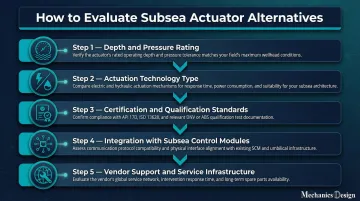
The selection criteria prioritized five key factors:
- Depth and pressure rating – Must match the operational envelope of the specific field development
- Actuation technology type – Electro-hydraulic vs. all-electric for alignment with all-electric well ambitions and environmental risk reduction
- Certification and qualification standards – ISO 10423, API 17D, or equivalent certifications ensuring pressure containment, materials, and functional testing requirements for subsea service
- Integration with subsea control modules – Compatibility with existing SCADA systems, umbilical infrastructure, and tree platforms
- Vendor support and service infrastructure – Availability of lifecycle maintenance, spare parts, and field support in operating regions
We also factored in market presence, documented field installations, and each supplier's ability to support energy transition goals — including all-electric subsea systems that eliminate hydraulic fluid environmental risk. DNV-RP-A203 technology qualification protocols were an additional consideration, as they ensure traceability from functional requirements to failure modes — essential due diligence for any novel all-electric actuator design.
Conclusion
While Aker Solutions built a strong reputation in subsea actuation—now channeled through the OneSubsea joint venture—procurement engineers evaluating alternatives have real options across TechnipFMC, Baker Hughes, Dril-Quip, Rotork, and OneSubsea itself as a standalone supplier. Each brings distinct technical strengths:
- TechnipFMC: iEPCI™ integration reduces interface risk across the full subsea system
- Baker Hughes: Proven performance in sour-service environments
- Dril-Quip: Vertical integration from tree to controls
- Rotork: Vendor-agnostic retrofits for existing infrastructure
Before making a supplier decision, assess total lifecycle cost, actuation technology roadmap (especially the industry shift toward all-electric subsea systems), and service support availability in your operating region. The transition to all-electric actuators can deliver measurable savings: roughly 15% on umbilicals and 10% on tree controls, while reducing environmental risk.
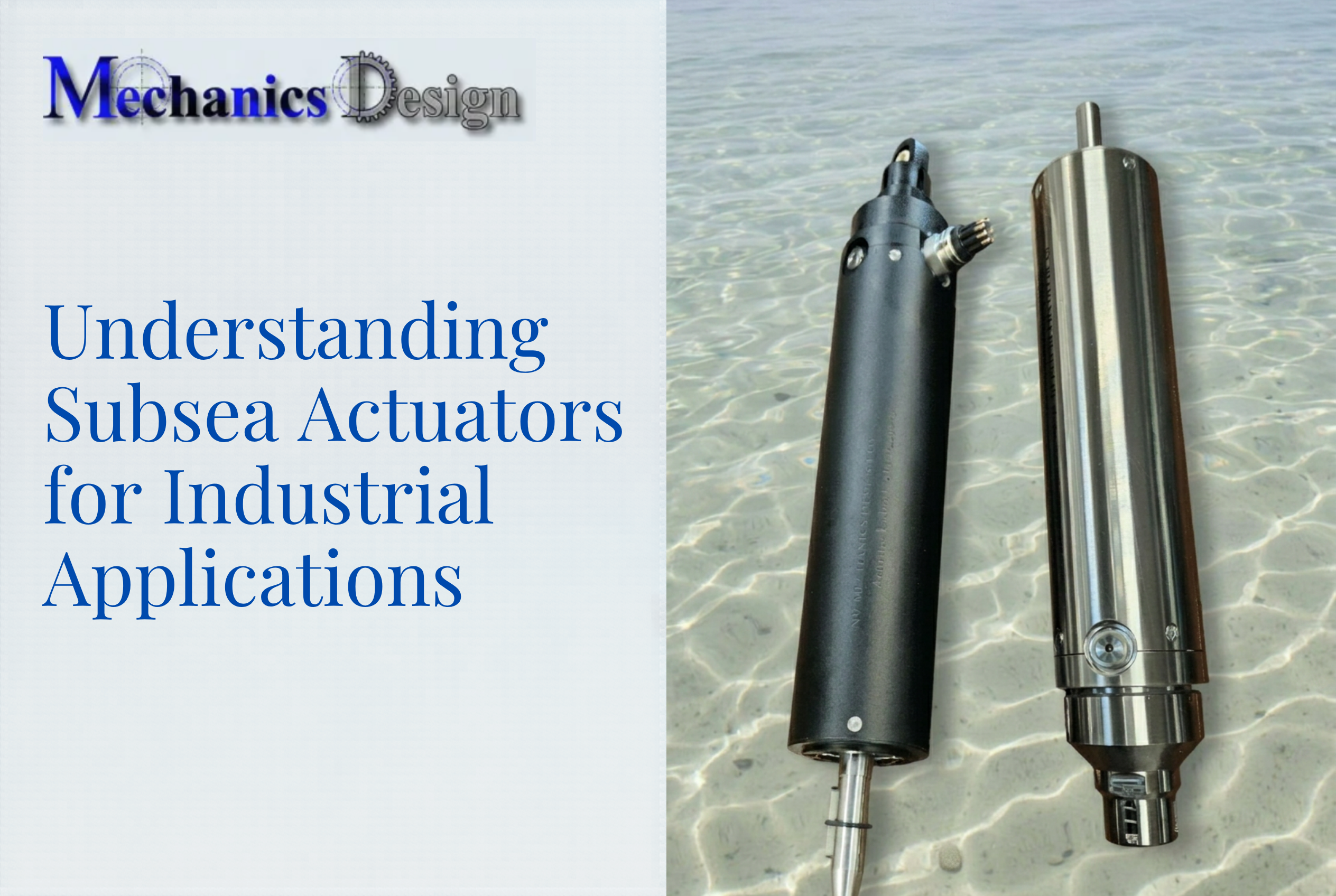
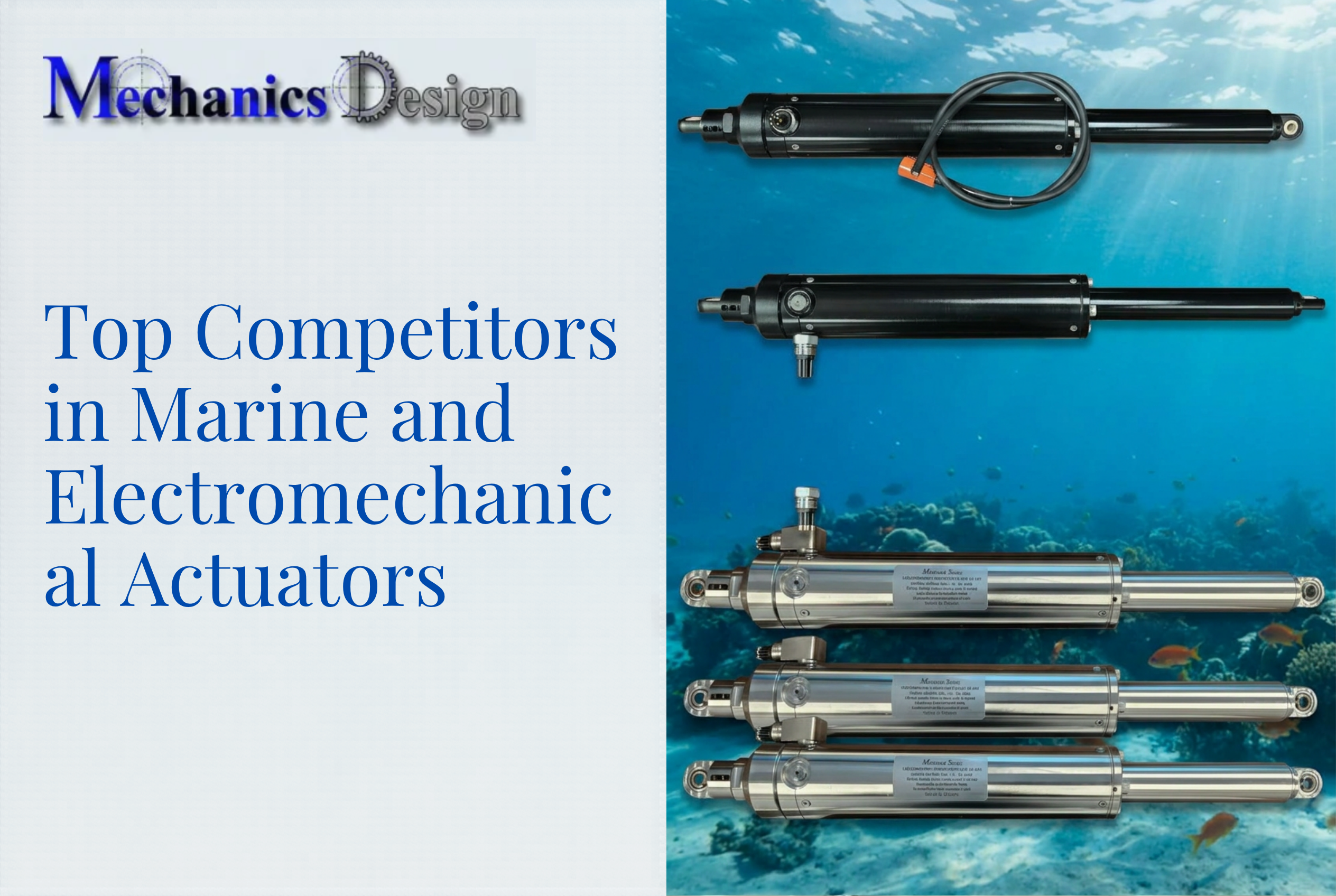
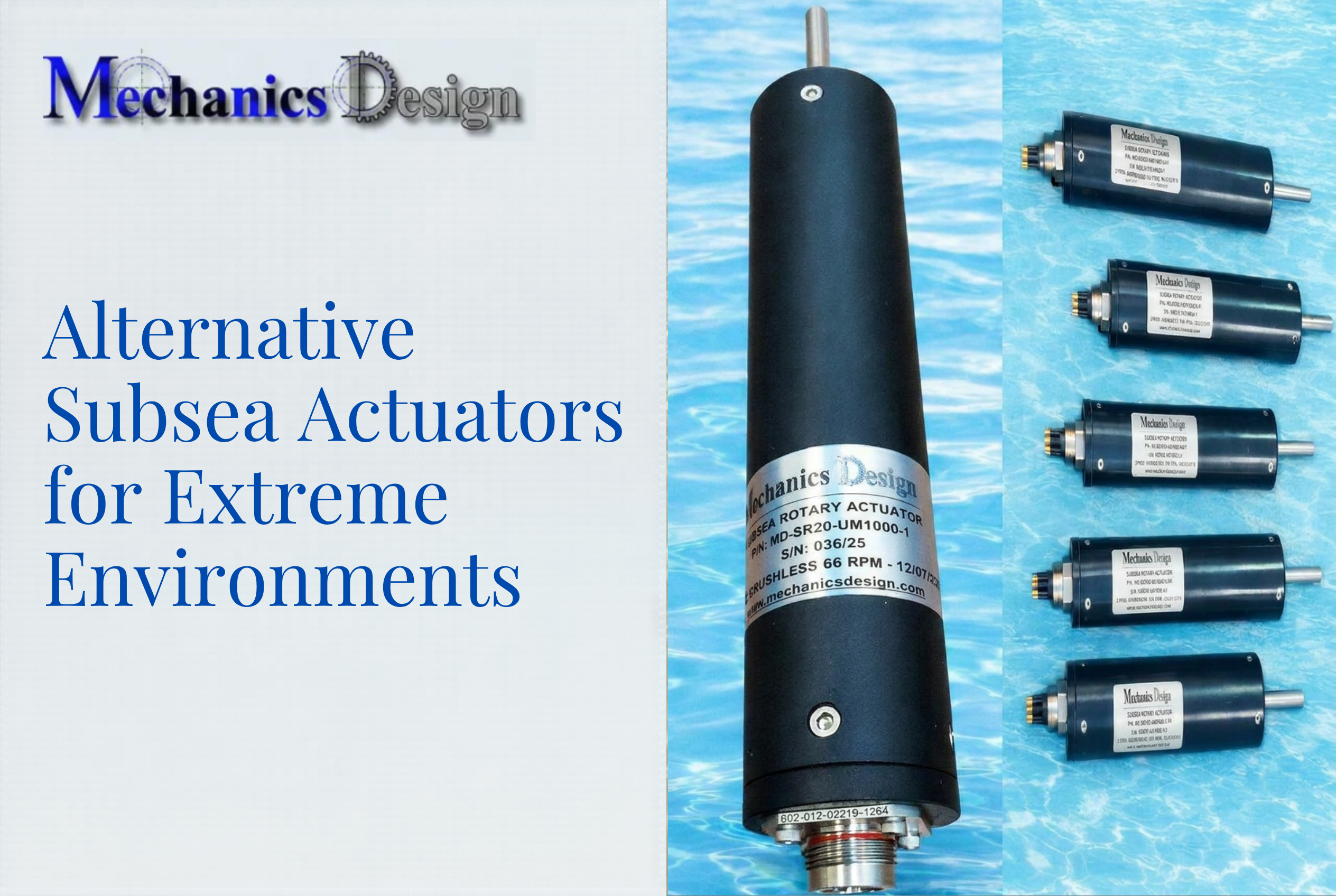
For underwater inspection, cleaning, and robotics applications requiring deep-rated actuators outside the traditional oilfield supply chain, NV Mechanics Design Ltd. offers pressure-compensated subsea actuators rated to 3,000m and 6,000m water depth with integrated drivers, absolute encoders, and RS232/RS422 control. These oil-compensated actuators suit remotely operated underwater systems where self-contained actuation is required, including ROV integration, subsea robotics, and marine research applications.
Frequently Asked Questions
What is a subsea actuator and how does it work?
A subsea actuator is an electro-hydraulic or all-electric device that opens and closes valves in subsea production trees and pipelines at depth. It receives commands via an umbilical or subsea control module and converts that electrical or hydraulic signal into mechanical valve movement, enabling remote operation where human intervention is impossible.
What are the main types of subsea actuators used in oil and gas?
The three main types are hydraulic (spring-return or double-acting), electro-hydraulic, and all-electric actuators. Hydraulic systems remain the dominant choice for high-force, high-cycle applications, while all-electric designs are gaining ground in deepwater fields where reducing umbilical complexity is a priority.
How deep can subsea actuators operate?
Most commercial subsea actuators are rated for 3,000 to 10,000 feet, with ultra-deepwater-qualified units exceeding that range. For example, OneSubsea's Vx Omni is standardized to 14,750 feet (4,500 m), illustrating how leading OEMs now target ultra-deepwater as a baseline specification.
What certifications should subsea actuators have?
Subsea actuators should hold ISO 10423, API 17D (which explicitly covers valves, valve blocks, and actuators), and relevant DNV or ATEX standards. Together, these certifications confirm the unit meets pressure containment, materials, and functional testing requirements for subsea service.
How do all-electric subsea actuators compare to hydraulic ones?
All-electric actuators eliminate hydraulic fluid, reducing environmental contamination risk and infrastructure complexity while delivering 15% CAPEX savings on umbilicals and 10% on tree controls. Hydraulic systems remain more proven for high-force, high-cycle applications — the trade-off is greater infrastructure complexity versus the all-electric option's lower environmental risk.
What should be considered when switching from Aker subsea actuators to an alternative supplier?
Key considerations include interface compatibility (connector and bore standards per ISO 13628-8), qualification documentation (API 17D, ISO 10423 certifications), spare parts availability, and whether the alternative supplier has field-proven installations in comparable depth and pressure conditions. Verify compatibility with your existing subsea control modules and SCADA infrastructure before committing to a vendor change.